| |

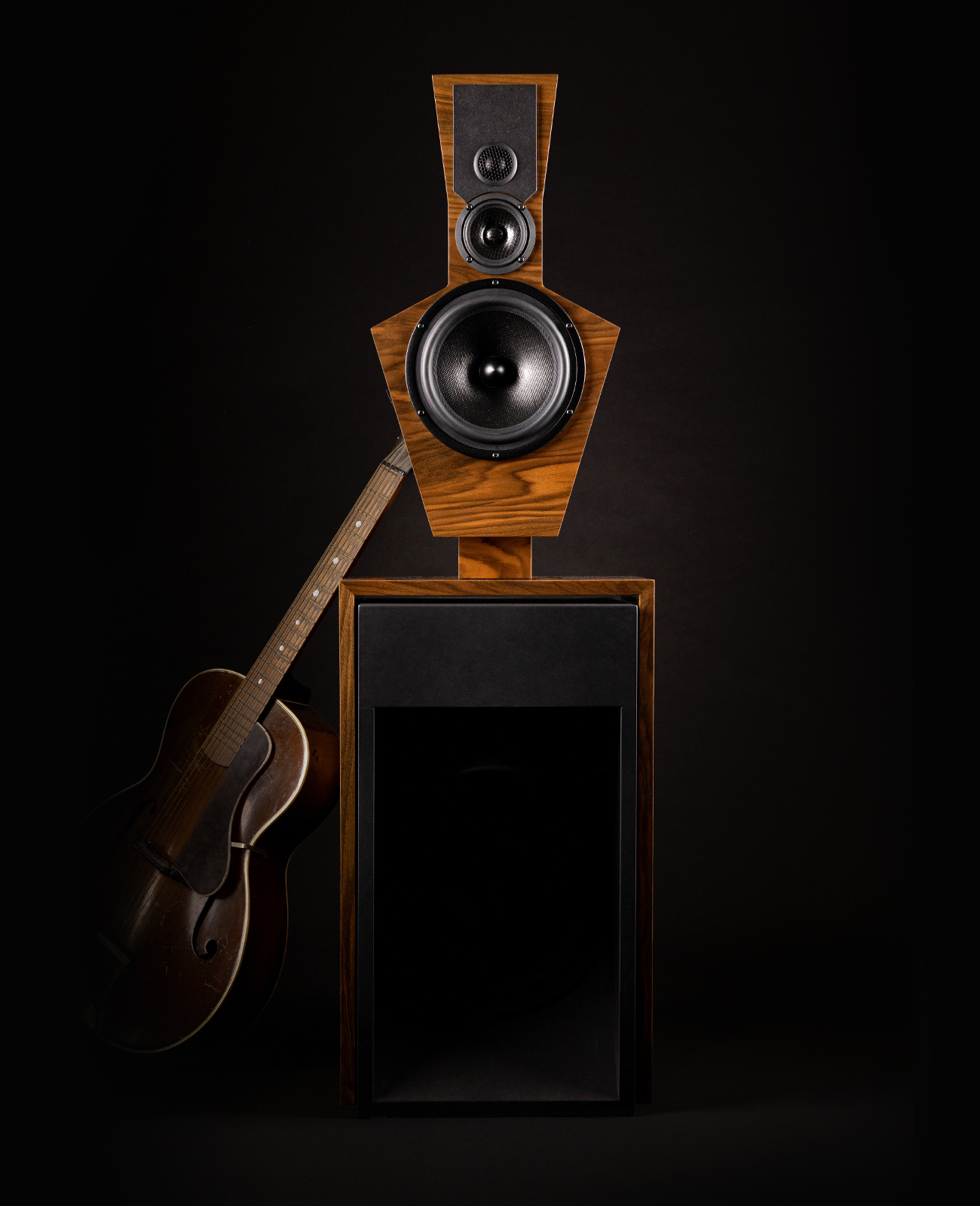
AXPONA 2022, finally, life is back, we enjoyed it,
....others, too:
 Frank Doris (Copper Magazine) was
visiting our LINKWITZ room at AXPONA 2022
read more..
Frank Doris (Copper Magazine) was
visiting our LINKWITZ room at AXPONA 2022
read more..
Thank you: The BEST OF SHOW award for LINKWITZ
read more..

April 22 - 24, 2022,
Renaissance Schaumburg Hotel & Convention Center |
Schaumburg, IL
Contact us via email
info@linkwitz.com for a
ticket discount code 25% off.

ROOM #725
|
|
|
|
|
|
NEXT AUDITIONs
OpenHouse, Saturday, Nov
13th 2021
10.00h-1400h
After a pandemic pause, Eike Linkwitz
likes to invite you to our first OpenHouse event this year. Listen to LX521 and
LXsirius in Corte Madera / 8mi north of Golden Gate Bridge. This event is
available exclusively for fully COVID-vaccinated participants.
Get your seats
via email to
info@linkwitz.com.
Driving and parking details will be provided. Pandemic rules (FFP2 masks) apply.
Extension of this event:
Additional LX521.4 audition Sunday, Nov
14th 2021
10.00h in Healdsburg/CA, Sonoma Valley. Get free tickets via email to Don Naples
|
|

Be a guest at the 22. European
Jazztival at Schloss Elmau / Southern Germany and audition LXspeakers in
the Foyer of the Konzertsaal. CANCELLED!
Thereafter, enjoy the
presentations of :
Michael Wollny, Nils Landgren,
Joel Lyssarides, Tord Gustavsen, RYMDEN, Mathias Eick, Cæcilie Norby, Lars
Danielsson, Johanna Summer...
|
|
You may pre-register via email
for audition on Nov.18th,19th,20th or 21th in the Konzertsaal
Foyer.
|
Meet
us at AXPONA , room #725.
April 22 - 24, 2022,
Renaissance Schaumburg Hotel & Convention Center |
Schaumburg, IL
Contact us via email
info@linkwitz.com for a
ticket discount code 25% off.
AXPONA
2020 has been cancelled !
Renaissance Schaumburg Hotel &
Convention Center | Schaumburg, IL
ROOM #725
|
|
Meet us at

|
|
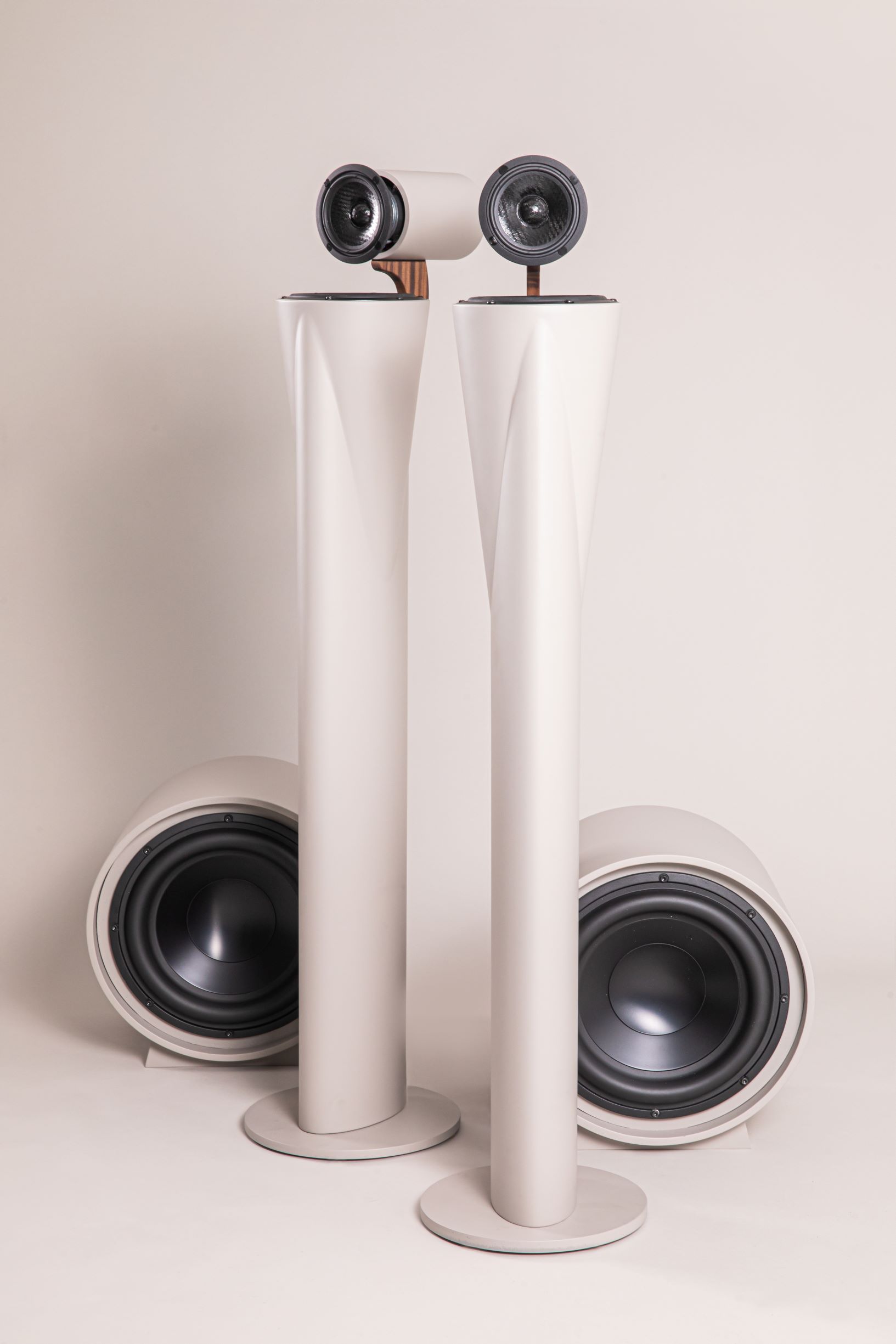
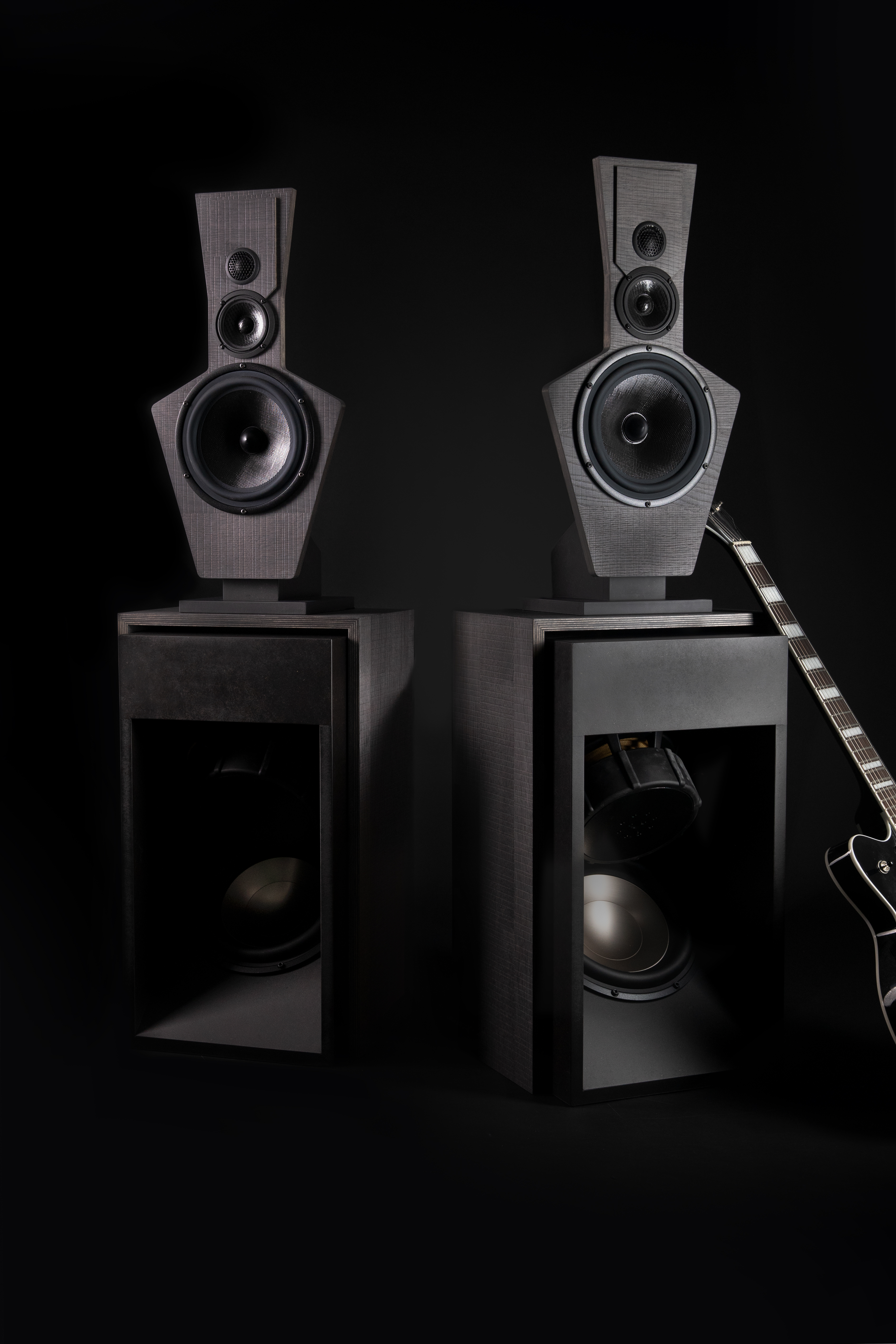
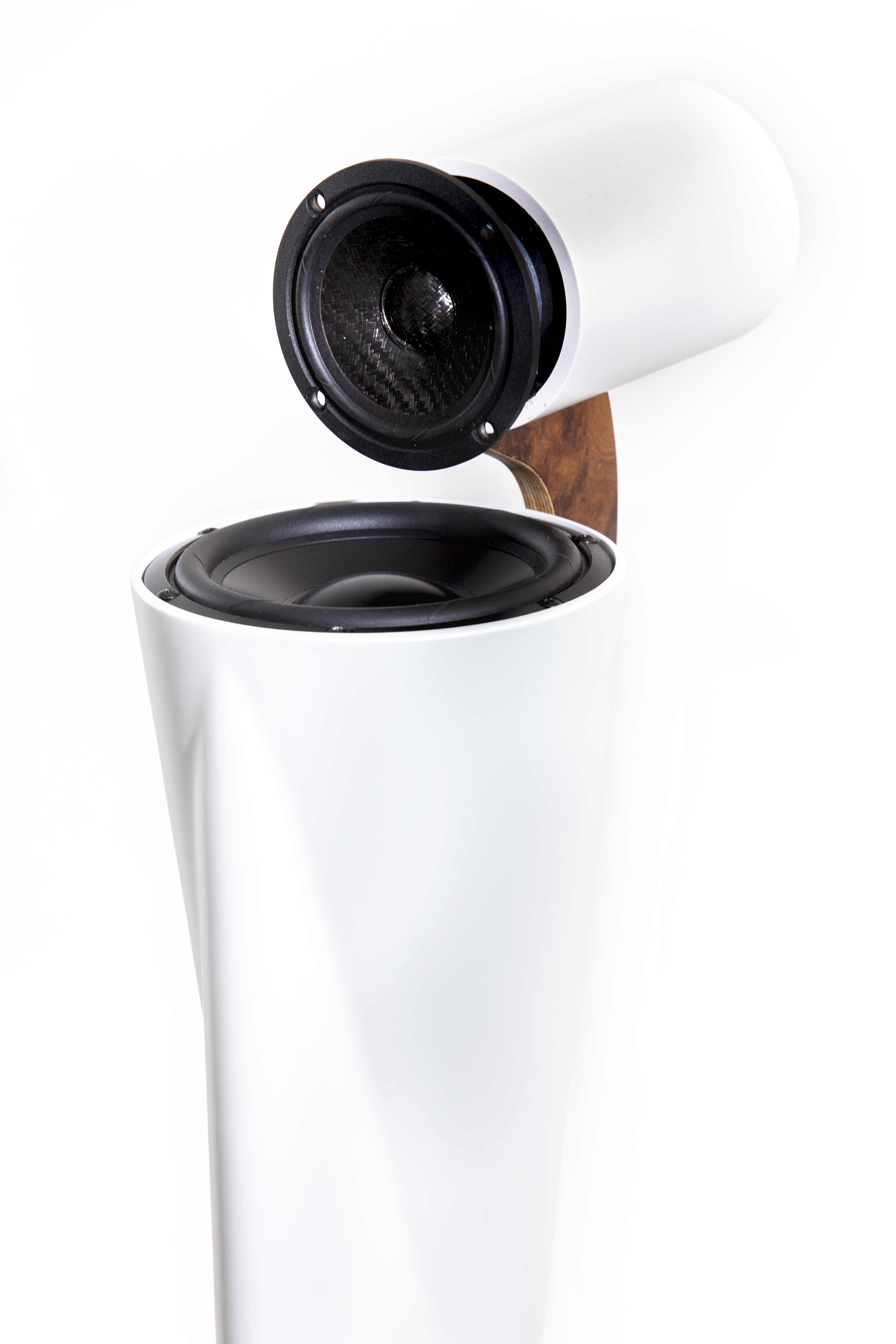
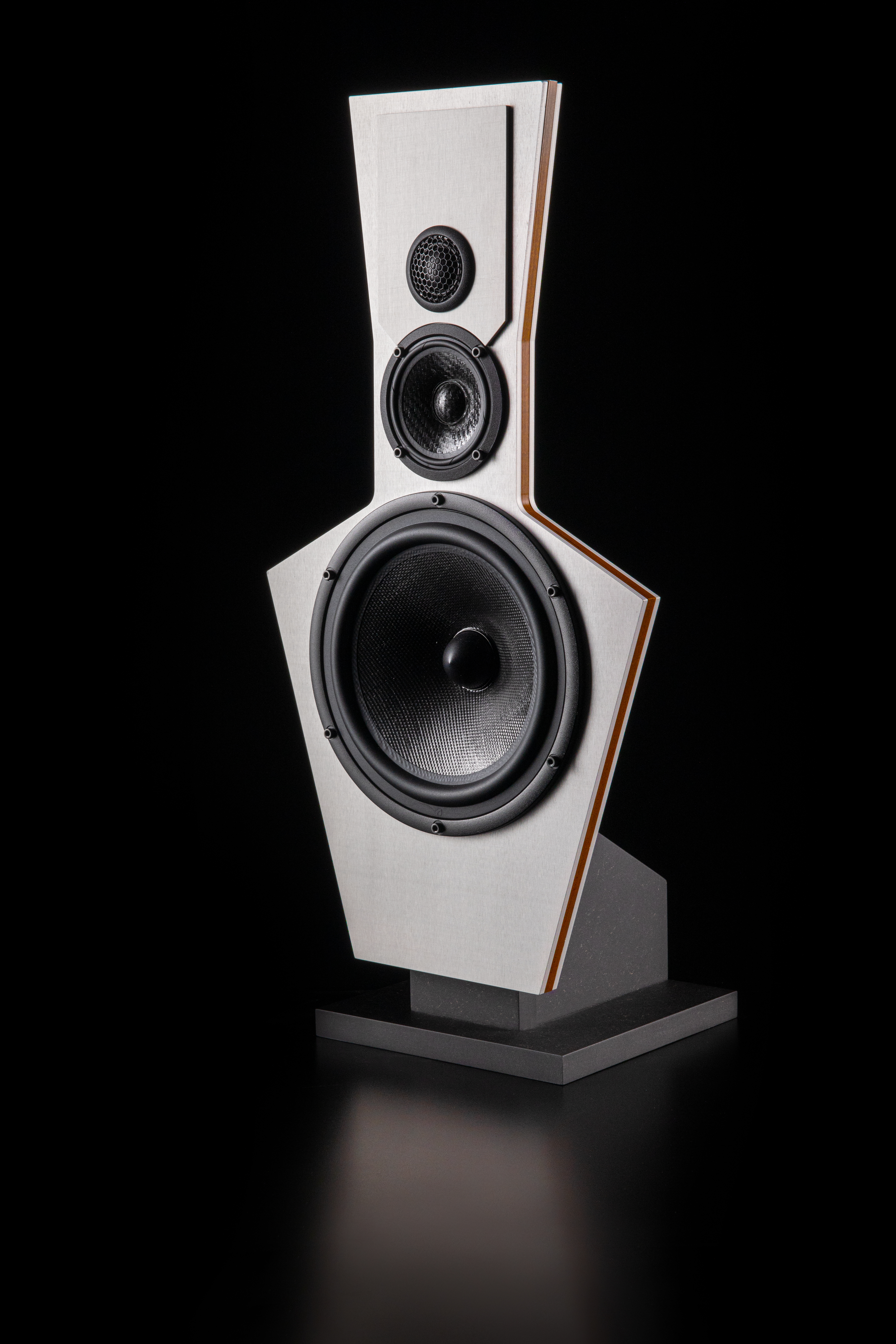
The LX family of active
and DSP or ASP controlled
electro-acoustic
transducers
for rendering realistic
sound scenes
in a wide range of rooms
Here are four loudspeaker systems, which are designed to
deliver The Magic in 2-Channel Sound
when properly set up:
|

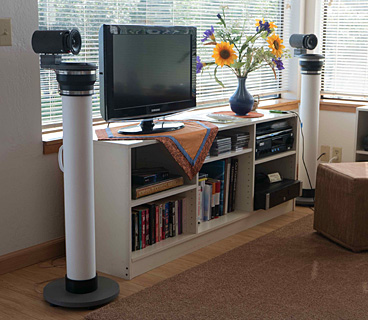
A 2-way loudspeaker that can
be built for around $1200 including miniDSP 2x4HD equalizer/crossover and 4 power
amplifiers in the 50 W to 200 W range.
The speaker has a unique polar pattern,
starting out as omni at low frequencies from the infinite transmission line
woofer, going through a cardioid region around the 800 Hz crossover to an
unbaffled, fullrange driver with dipolar behavior. Due
to the low crossover frequency and acoustically close proximity of drivers the
polar pattern is identical in vertical and horizontal directions, like in a
coaxial design, but it has much wider dispersion at higher frequencies. The
frequency range extends from 45 Hz to 20 kHz with 12 dB/octave roll-off at the
low end.
LXmini Construction Plans: $105
|
Read: LXmini+2
at Burning Amp 2016
|

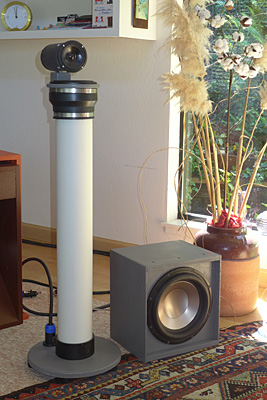
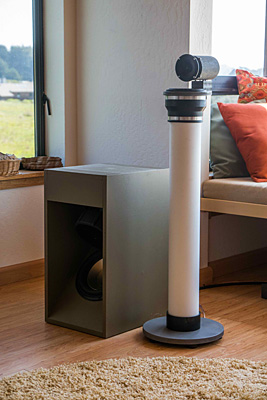
A 3-way loudspeaker that combines the
LXmini with two, compact LXsub2 dipole woofers.
It requires addition of two 50 W power amplifiers and a miniDSP 4x10HD unit to form a system that
covers the 20 Hz to 20 kHz frequency range with excellent clarity and dynamism.
With an LR2 crossover at a low 60 Hz the woofers can be placed against the side
walls of a room and the LXmini used as near-field monitors. Path length
differences to the listener can be compensated for in the DSP unit. Dipole
woofers have the advantage of less room mode excitation and thus preserve
articulation in bass sounds.
LXmini Construction Plans: $105
+
LXsub Construction Plans: $55
|
|

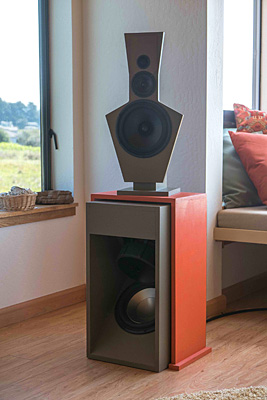
A 3-way loudspeaker that combines the
LXmini with two LXsub4 dipole woofers, which have 10 dB higher output capability
than the LXsub2.
It requires addition of two 200 W
or four 50 W power amplifiers and a miniDSP 4x10HD unit to form a system that
covers the 20 Hz to 20 kHz frequency range with excellent clarity and dynamism.
With an LR2 crossover at a low 60 Hz the woofers can be placed against the side
walls of a room and the LXmini used as near-field monitors. Path length
differences to the listener can be compensated for in the DSP unit. Dipole
woofers have the advantage of less room mode excitation, which matters even in a
highly damped recording/mixing studio.
LXmini Construction
Plans: $105 +
LXsub Construction Plans: $55
|
|

A 4-way loudspeaker, designed as
full-range dipole, for flat on-axis and off-axis response in the horizontal
plane and frontal hemisphere. It requires between 8 to10 power amplifiers of 50
W to 200 W and a miniDSP 4x10HD.
The speakers need breathing room of at least 1
m to the nearest large reflecting surfaces and a room with a minimum floor size
of 25 sqm.
LX521 Construction Plans: $155
(The LX521.4
is documented on the included LX521 Owner Support page)
|
I consider each one of the four systems as
state-of-the-art for rendering a convincing stereo illusion, that touches one's
emotions, that is analytically revealing of flaws in the recording, yet at the
same time forgiving them, if the art comes through. I therefore recommend
building these speakers not only to the DIY community, but also to professional
recording/mixing/mastering engineers and especially to the designers of consumer
products to hear for themselves what they have been missing. Hopefully these
designs inspire a fresh look at what is possible in terms of believable 3D from
two speakers before everyone launches off into 3D over
headphones with their unnatural distance distortion.
For further details about these speaker
systems, about ordering plans, construction materials, active crossovers and amplifiers,
start with the LXmini,
LXmini+2, LXstudio or LX521
page.
Complete systems
After you have received the Construction Plans you
may realize that you do not have the time, skill or confidence to build
the speaker system yourself. Or, you may know this from the outset and
want to buy a professionally assembled and finished system. Here then are
licensed manufacturers:
From Germany:
www.LINKWITZ.store
for LXsirius,
LXsirius+2,
LXstudio,
LX521.4
with PowerBox, shipping worldwide with
 and
and UPS. UPS.
From USA: LXspeakerfactory.com for LXmini, LXmini w/Subs, Orion4d
See Terms
& Conditions to guarantee that you receive a genuine
LINKWITZ LAB product.
|
|


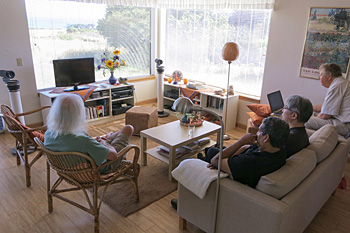
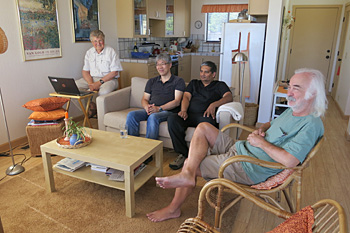
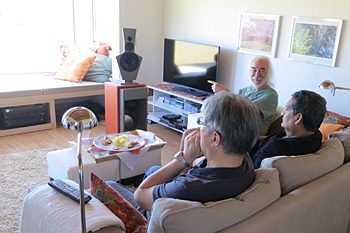
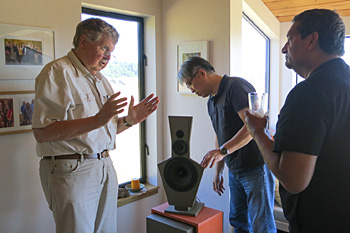
That will take some effort on your part
and I recommend to find a LXmini or LX521 owner in your corner of the world.
I have sent construction plans to many countries and
www.LINKWITZ.store
has shipped turnkey systems. See also www.linkwitz.com
Argentina, Australia, Austria, Belgium,
Brazil, Bulgaria, Burma, Canada, Chile, China, Croatia, Czech Republic, Denmark,
Ecuador, Estonia, Finland, France,
Germany, Greece, Hungary, Hong Kong, India, Indonesia, Iran, Ireland, Italy, Japan, Korea, Latvia, Luxembourg, Malaysia, Mozambique, Netherlands,
New Guinea, New Zealand, Norway, Pakistan, Philippines, Poland,
Portugal, Romania, Russian Federation, Singapore, Slovakia, Slovenia, South Africa,
Spain, Sri Lanka, Sweden, Switzerland, Taiwan, Thailand,
Turkey, UAE, Uruguay, UK, USA
I will not give out names or email
addresses, but you could try to make contact via the OPLUG
forum with one of the many DIY builders who frequent the forum. I have had
Open House events to hear the loudspeakers here in Corte
Madera and at The Sea
Ranch earlier this year, but nothing is upcoming.
I can assure you, though, that even if
you have not heard LXmini or LX521 before making your decision, that you will be
extremely delighted with their sound once you have built or acquired them.
Either one will give you a completely new experience of your music collection.
You are in for a treat. With these speakers you move to a new paradigm
for stereo sound reproduction.
Have fun, create memories!
|
... Have Fun ... Create
Memories ...
*****************************************************************
|
<<<<<<
2014 and earlier >>>>>>
15 Years of
www.linkwitzlab.com
|
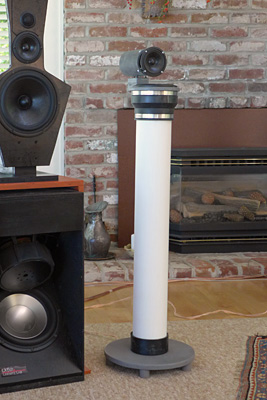 |
LXmini...
Reference Quality Sound in any size room
The LX521 loudspeakers are no longer alone in
their ability to render in stereo a detailed 3D auditory scene with
clarity, dynamism and neutral timbre for any kind of music.
The LXmini, at smaller size and lower cost, is a
close match to its bigger brother, except for lower maximum sound
capability below 200 Hz and rolling off the bass below 45 Hz. While the
LX521 needs at least a 25 m2 room and open space around it,
the LXmini was designed to work well in any size room. The standard
stereo triangle formed by loudspeakers and listener can be as small as 1
m for each side and be close to a wall. But unlike with headphones the
auditory illusion is in front and stays there with head movement as is
natural. Of course the size and distance to the auditory illusion
increases with spreading out the triangle, limited only by the space
available.
The LXmini is easy to build. No soldering is
required, just sawing, sanding, drilling holes, screwing parts together
and crimping wire connections.
The LXmini
is in reach of every music lover! |
LX521 - Reference Loudspeaker
Few people have ever heard the detailed 3D
rendering and realism that the stereo format is capable of when the
loudspeakers are designed to illuminate the room evenly for all sounds
and are properly set up in the room.
The LX521 Reference Loudspeaker is an open-baffle,
constant directivity radiator for the enjoyment of any type of music in
the home and also for final judgment of work in the recording studio.
The LX521 is designed to minimize the
influence of the listening room upon the stereo image, which is formed in
the listener's mind. The loudspeakers
themselves disappear from aural perception, leaving in front of you a
phantom acoustic scene to enjoy and study, and not just from the
"sweet spot". Ultimately you are likely to get
lost in the music. That is what I experience with a good recording.
Most of my involvement with audio was about
designing and building loudspeakers for my own use, for my own home. I
have tried to push the state of the art, because I was never quite
satisfied with commercial products, or could not afford what I liked at
the time. I also discovered that even the best professional loudspeaker
designers had unanswered questions and that I was not alone in my search. My
education in electrical engineering, my work in electronic test
equipment design and in microwaves had given me a good opening for
designing broadband acoustic radiators that cover a range of
wavelengths, which is equivalent to the range from 20 MHz to
20 GHz in electromagnetic terms.
I have developed a deep appreciation of
how the brain constructs an aural scene from the multiplicity of
superimposed sound streams, which impinge upon each eardrum all the
time. The brain's working suggests how to design a loudspeaker so that
it can withdraw attention from the loudspeaker as the source of sound
and the listening room as the real place, thus leaving an aural scene, an
illusion floating in front of the listener.
|
Sound
as close to Live -
as the Recording provides!
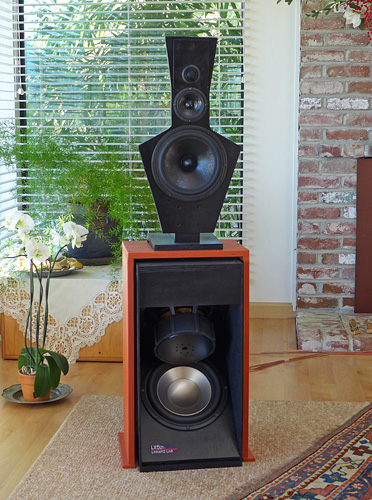
MAGIC is my other name
for the LX521.
My search is over!
|
ORION-3.4 Loudspeakers
In 2002 I put out the challenge
to build yourself a high performance open-baffle loudspeaker system with
electronic crossover/equalizer and multiple power amplifiers. The ORION
incorporated what I had learned from designing loudspeakers for Audio Artistry
and the follow-on PHOENIX. Soon after, Don Naples from Wood Artistry joined to
supply precut wood parts and then complete, custom finished ORION systems. Today
you can find hundreds of delighted ORION owners all over the world.
The loudspeaker's design changed somewhat over
the years. The midrange driver was mounted by its magnet. A rear tweeter was
added. The frequency response was tweaked after hearing the first PLUTO. Don
Barringer, a trained musician and former recording engineer with the US Marine
Band, helped me in this process with many hours of listening. I am not touching
the design anymore. The ORION has reached its full potential.
|
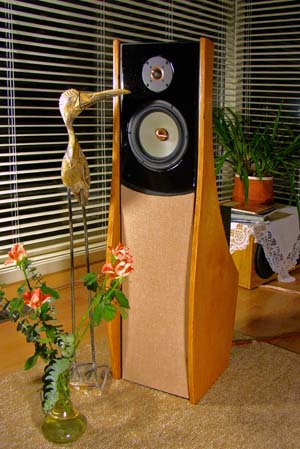
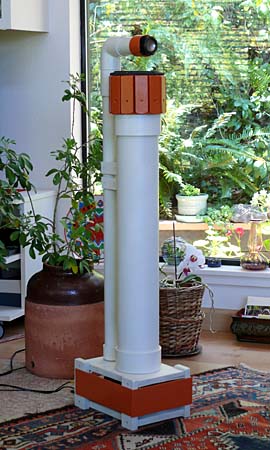
ORION with optional THOR subwoofers in back
|
|
|
PLUTO-2.1
PLUTO came about
in 2005 after I had used its AURA tweeter as a small loudspeaker for low
frequency room mode studies in a 10:1 scale model of my listening room. The
tweeter opened the possibility of building a fairly decent omni-directional
loudspeaker. I needed it as a reference source for studying baffle diffraction
effects of the ORION.
PLUTO evolved to the 2-way full-range loudspeaker that it
is today when SEAS supplied me with a custom woofer/midrange driver. The
loudspeaker is now ideally suited for smaller living spaces or as a lower cost
alternative to ORION in larger rooms. PLUTO delivers great sound to hundreds of
audiophiles worldwide, following ORION's example.
PLUTO-2.1 is a great father-son/daughter DIY
project. The speaker has built-in power amplifiers, hooks up to the iPod or laptop
and is easily moved. It provides an introduction to high quality sound.
|
PHOENIX
I launched this website in 1999 after I had
separated from Audio Artistry. I left behind three proud design
accomplishments: Vivaldi, Dvorak and Beethoven, all open-baffle loudspeakers.
Much had been learned about loudspeaker design with passive and active
crossover/equalizers. It added
to what I had gathered from my audio hobby activities with other
engineers at Hewlett-Packard Co. Especially Russ Riley, Lyman Miller and
Brian Elliott had inspired me. So on leaving AA I wanted to write it all down,
that it might benefit others and not get lost.
The PHOENIX project
was meant to be an illustrative exercise for others to judge the
validity of what I was claiming. A study of the material will give you useful
insight into the theory, design and construction
of an open-baffle speaker, the necessary line-level crossover/equalizer and
electronic filters.
For the later ORION design I combined the
separate dipole woofer with midrange and tweeter in a single cabinet. I also avoided
the MTM driver arrangement. |
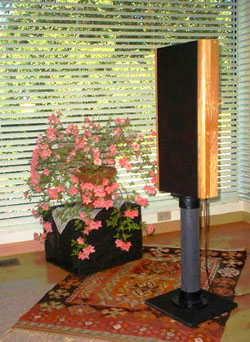
PHOENIX main panel and
separate dipole woofer in W-frame |
 |
Recording, Rendering
If you want to learn about the theory behind
stereo, about what it takes to create a phantom acoustic scene between two
loudspeakers in your living room, then read Stereo
Recording and Rendering - 101.
|
Publications, Talks, Links, CD's
To get a taste of the large number of
considerations that enter into the design of a loudspeaker you might
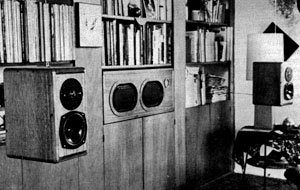
read a ground breaking "Loudspeaker System Design"
article. It was published 1978 in Wireless World magazine and describes
a three-enclosure loudspeaker with active delay and crossovers using
drivers that were highly regarded at the time, KEF T27, B110 and B139. |
 |
 |
|
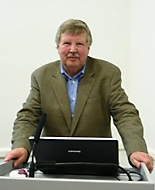
And then listen
to a talk given 30 years later about accurate sound reproduction from
two loudspeakers in a living room, to hear and see what more has been learned.
Or see my take on loudspeakers in
2013.
On the Links and Other designs pages you will
find relevant and interesting material. It will show you that there is
still much to learn about the optimum configuration of loudspeaker, room,
setup and
recording in order to create a "realistic sound illusion".
I offer recordings of useful test signals for room analysis and sound tracks to evaluate your
loudspeakers.
Look at the Site map to
orient yourself when searching for specific information.
Check out the ORION/PLUTO/LX521
User Group for the exchange of ideas, for questions about LX521, ORION and PLUTO and to make
contact with owners.
|
 www.LinkwitzLab.com www.LinkwitzLab.com
You have come to a website with a wealth of
useful and practical information about loudspeaker design, electro-acoustic system
design and about perception of sound from loudspeakers in normal rooms. I have been active in
this field for over 40 years, motivated by my love for music and by a keen
interest in the difficulties of reproducing music realistically in the home.
After retiring from Hewlett-Packard Co. (now 'Agilent') with 37
years in R&D of radio-frequency and microwave electronic test equipment, I
pursued my investigation of the loudspeaker-room-listener interaction with refreshed
energy and time. In
the late nineties I had developed the Beethoven/Dvorak/Vivaldi line of open-baffle
loudspeakers for Audio Artistry. My objective has always been the development of
cost effective loudspeaker systems for two-channel sound
playback of the highest accuracy. Occasionally I experiment with surround
sound. Video sound and moving pictures are of low interest to me, but digital
photography has rekindled my lifelong fascination with pictorial expression.
On this site you will find the essence of what I have
learned from designing, building and listening to many different types of speakers.
Fortunately, I
was rarely bound by commercial considerations or restricted by market
expectations. I was free to search for the
parameters that are truly important to realistic reproduction. Throughout this
search, my sonic reference
has always been the
non-amplified original performance.
My motto has always been to be "true to the
original, as it was recorded". I want to reproduce a recording without
adding or subtracting from it either because of the loudspeakers or the room.
The recording then defines the possible realism of the auditory scene. On this website you
find
information that allows you to build, to purchase, or to design loudspeakers which
exemplify the pursuit of realistic rendering.
|
Check out the topics that are listed in the
column on the left hand side of this page. I hope that the material presented here will add to
your understanding of what is necessary for accurate sound reproduction.
Regrettably, much misinformation and outright nonsense has been published to promote
certain "high-end" audio
products. The power of suggestion works exceedingly well,
when
listeners do not trust their own hearing. I recommend to re-calibrate yourself frequently.
Listen closely to all sorts of non-amplified sounds in order to
recognize and remember natural sonic scenes. Without a reality based
mental reference it becomes an endless and futile pursuit to listen for differences between
speakers and equipment in order to find the least falsification and a believable
illusion of live sound and space.
|
CAUTION:
The content of any page may change without notice
as I learn new things or find better descriptions. The designs presented here
may change as I make new observations or gain more insight. Audio has overwhelmingly been a hobby for me, for my own pleasure and love of
music. I enjoy to share what I found and possibly to dispel a few
misconceptions. My interest is not on the business side, though I like that my
activities pay for my hobbies. You may not agree with some or all aspects of my
designs, the approach that I take to them, or the theories. I have no problem
with that. Just do not ask me "what would happen if ...". Changes that
you make to the designs are for your own pleasure and at your own risk. But if
you learn something worthwhile, then please let me know. My DIY projects are not
for beginners and it may be necessary for you to buy subassemblies or a turnkey
system. Please do not ask me for individual help with your
DIY difficulties. All my designs have a Support Page. It is listed on the cover
or inside your project documentation. There is an ORION/PLUTO/LX521 Users
Group with people who can help you. I respond to every email eventually, but
you may not get the answer you want. I consider my writings in these web pages
as brief and to the point. I labor over every sentence and word and provide
little redundancy. I am not a native English speaker. I grew up in Germany. Read thoroughly and maybe more than once. I do not write for
the rank beginner, but for those who have been around the block. You may need to
study up. The links in my text are for that. I have not been standing still
since I started this website in 1999 with the idea of a brain dump of my
previous findings so they would not get lost to the audio community. In 2006,
after PLUTO, I thought I would go into a support and maintenance mode. No new
design. Stuff happened, more work to be done on radiation patterns. Also the recording and rendering
process interested me. Therefore the LX521. It brings to completion my search
for the prototype of an ideal stereo loudspeaker. It has confirmed theories and
observations of how we hear in reverberant spaces The auditory illusion is
convincing. I am satisfied. It's time to enjoy the
sublime magic of sound and space! - January, 2014
|
From where and in what numbers do
visitors come to this website?
Top 25 countries in a 7.5 month
period from June 2013 to January 2014 with a total of 63,734 visits (283/day):
| By
number of visits |
Rank |
By
number of
visits / population |
United States
Germany
United Kingdom
Canada
Australia
Sweden
Netherlands
France
Russian Federation
Norway
Poland
Italy
Denmark
Switzerland
Finland
Japan
China
Brazil
New Zealand
India
Serbia
Spain
Belgium
Singapore
Croatia |
1
2
3
4
5
6
7
8
9
10
11
12
13
14
15
16
17
18
19
20
21
22
23
24
25 |
Norway
Sweden
Denmark
Finland
New Zealand
Netherlands
Switzerland
Australia
Canada
Croatia
Singapore
United States
Serbia
Slovakia
United Kingdom
Germany
Belgium
Austria
Hungary
Greece
Czech Republic
Poland
France
Italy
Russian Federation |
For current data click on the world map
below
|




.jpg)